This is an example page. It’s different from a blog post because it will stay in one place and will show up in your site navigation (in most themes). Most people start with an About page that introduces them to potential site visitors. It might say something like this:

Hi there! I’m a bike messenger by day, aspiring actor by night, and this is my website. I live in Los Angeles, have a great dog named Jack, and I like piña coladas. (And gettin’ caught in the rain.)

…or something like this:

The XYZ Doohickey Company was founded in 1971, and has been providing quality doohickeys to the public ever since. Located in Gotham City, XYZ employs over 2,000 people and does all kinds of awesome things for the Gotham community.

As a new WordPress user, you should go to your dashboard to delete this page and create new pages for your content. Have fun!

George Washington recognized Gálvez’s victories as crucial to the birth of the United States. In the 1783 victory parade, Gálvez rode at Washington’s right, honored as a great ally of liberty. Gálvez’s legacy lives on in U.S. geography (Galveston, Texas; St. Bernard Parish, Louisiana) and in 2014, he was granted Honorary U.S. Citizenship by Congress, joining a select group of figures like Winston Churchill and Mother Teresa.

Gálvez’s portrait was promised in 1783 and finally hung in the Capitol in 2014. Honors continue, such as the USS Gálvez frigate and a commemorative stamp for the 250th Anniversary of Independence. From Galveston to Washington, Gálvez remains a symbol of Spain’s vital contribution to American liberty, with Málaga’s sacrifice ensuring the birth of the United States.

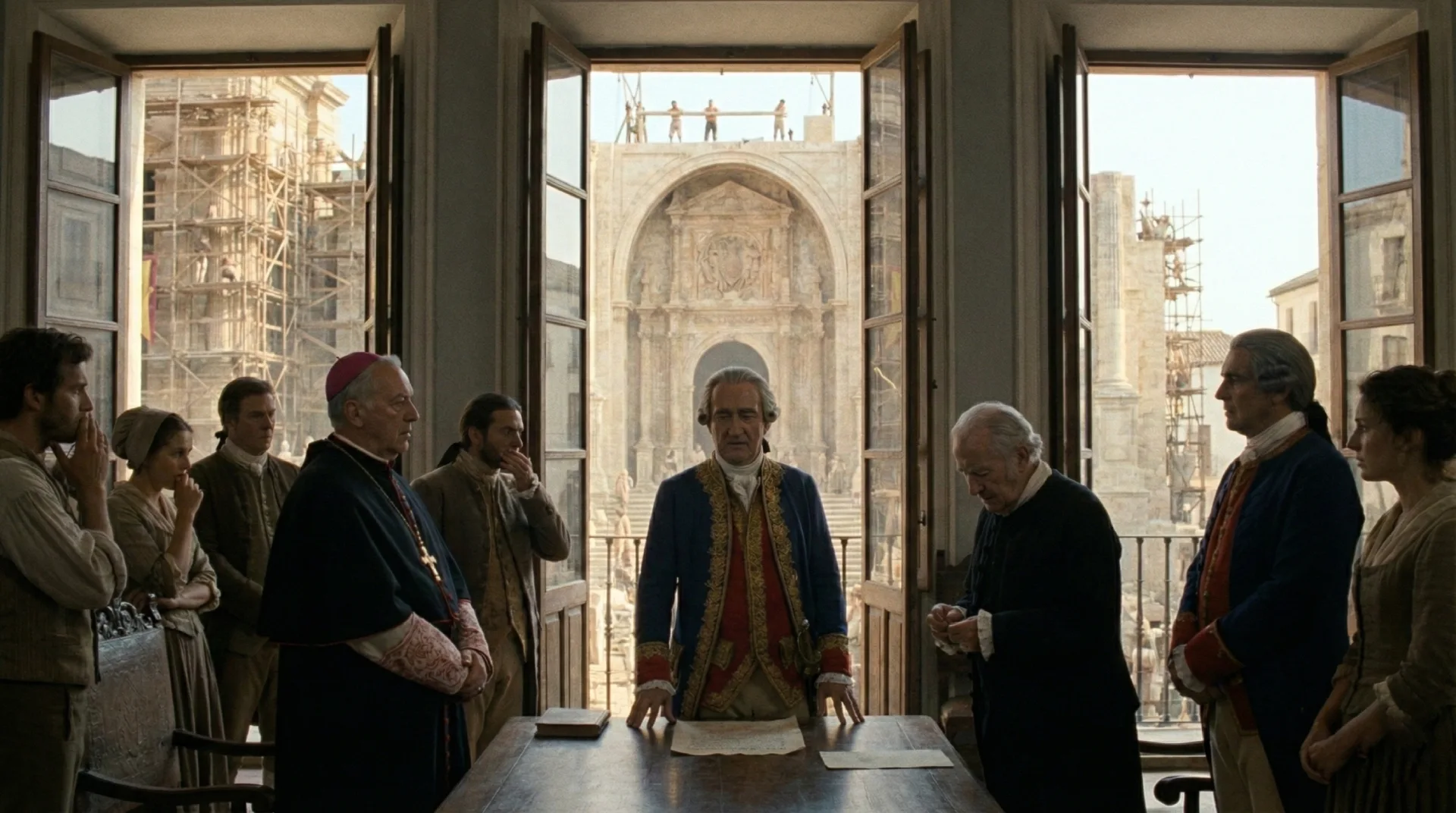
Gálvez understood that victory at Yorktown was essential for American independence. At a time when Washington’s army was on the verge of collapse, lacking funds, provisions, and support, Gálvez took decisive action. He mobilized the Spanish Empire’s resources without waiting for approval, including halting the construction of Málaga’s majestic cathedral. The money allocated for the cathedral was sent urgently to fund the final battle.

This 400,000 reales secured arms for Washington’s troops and provisions for the French fleet, enabling the blockade of the British. When Cornwallis surrendered in October 1781, the war effectively ended. Gálvez’s financial intervention, though largely unknown, played a crucial role in the victory. The Málaga Cathedral, known as “La Manquita” (The One-Armed Lady), stands as a monument to the sacrifice that made American independence possible.

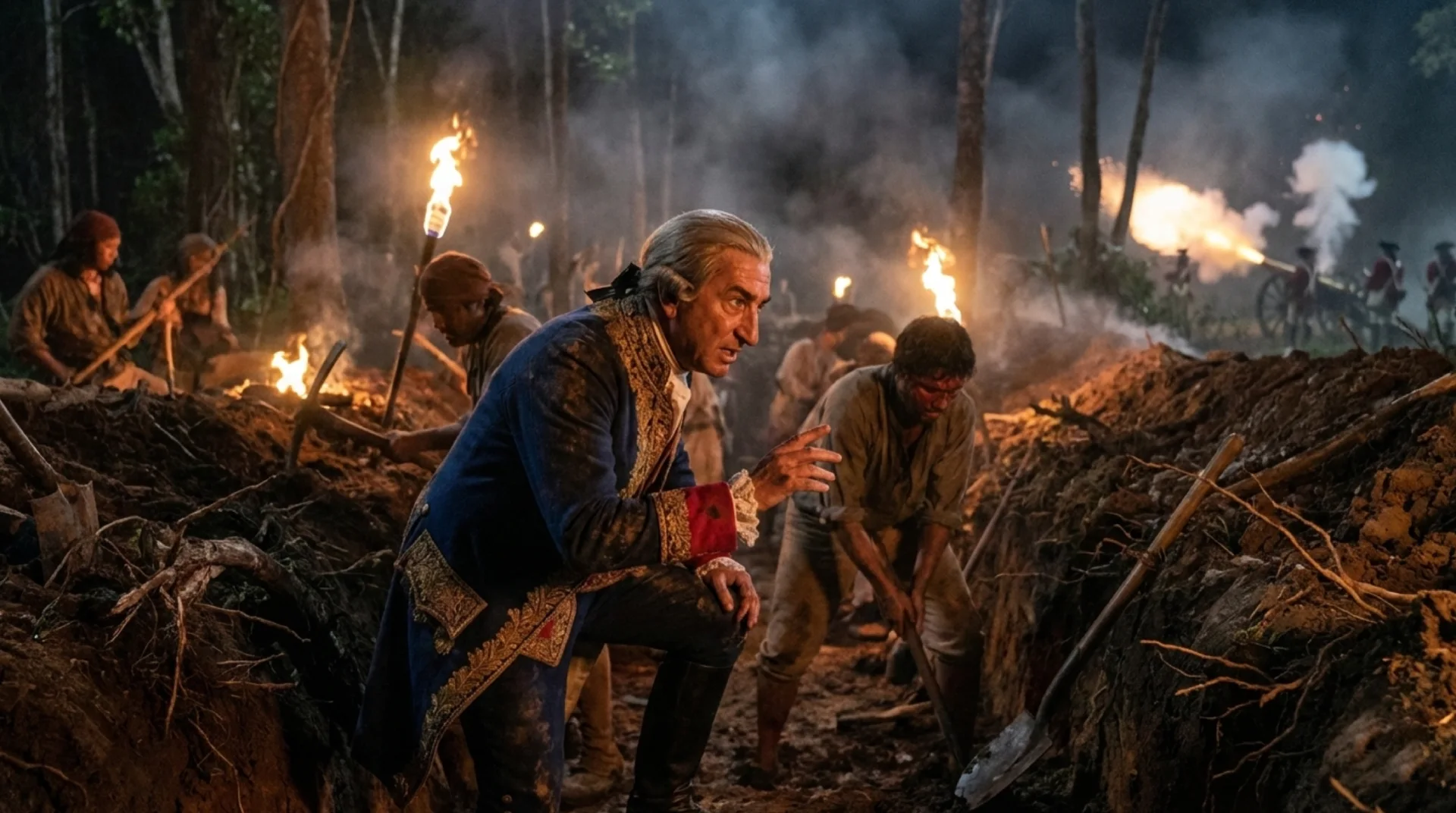
The fate of the war hinged on Pensacola, Florida, a British stronghold. If it fell, Britain would lose the continent and the Gulf of Mexico. Gálvez, with a diverse force of Spaniards, African Americans, Indigenous warriors, and former slaves, arrived in March 1781. The entrance was blocked by a sandbar and British cannons, causing the Spanish fleet to hesitate. Furious, Gálvez took matters into his own hands, defying orders and sailing alone into the bay under heavy fire, inspiring his fleet to follow.

With the fleet inside, Gálvez led a two-month siege, steadily advancing toward Fort George. On May 8, 1781, a Spanish shell destroyed the British powder magazine, opening a massive breach. Gálvez ordered a bayonet assault, capturing the fort’s key position. British General Campbell surrendered that afternoon.

The fall of Pensacola allowed George Washington to focus on the final battle at Yorktown. For his bravery, King Charles III awarded Gálvez the motto “I ALONE,” embodying his courage and leadership.

In June 1779, Spain declared war on Great Britain, and Gálvez, aware of British plans to attack New Orleans, decided to strike first. A hurricane destroyed his fleet, but Gálvez’s resolve remained unshaken. He assembled a diverse force of 1,400 men and, despite harsh conditions, captured the British post at Manchac.

The challenge came at Fort New Richmond, but Gálvez used clever tactics to outsmart the British, capturing the fort and demanding additional territory. He then turned to the Gulf of Mexico, targeting Mobile. Despite a storm scattering his fleet and wrecking supplies, Gálvez salvaged what he could and laid siege to Fort Charlotte. After a successful breach, the British surrendered, isolating their stronghold in Pensacola.

Gálvez’s bold actions weakened British power in the South, playing a key role in securing the independence of the northern colonies.

Bernardo de Gálvez‘s relationship with African Americans and enslaved people was revolutionary for its time, marked by military integration, merit recognition, and social flexibility. He was a pioneer in recruiting African Americans, free Black men, and mulatto soldiers, granting them honor and status often denied by other armies. Gálvez’s army, which included over 7,500 men, was notably diverse and he valued effectiveness over race. He even declared that race did not matter in loyalty and bravery.

Under his rule, Spanish laws offered more humane treatment than British or French «Black Codes,» leading to increased freedom for formerly enslaved people. Louisiana became a refuge for enslaved people seeking freedom. Gálvez also prohibited the enslavement of Indigenous peoples, earning their trust and eliminating this practice. His army, composed of diverse groups, was the first truly integrated force to win on North American soil. Gálvez’s legacy was one of demonstrating that loyalty and valor were not defined by race.

When the Thirteen Colonies declared independence in 1776, they were suffocating. The British controlled the Atlantic. George Washington’s Continental Army had no gunpowder, no uniforms, no medicine. The revolution was destined to die of hunger and disease — and to be annihilated years later by the British at the Battle of Yorktown.
Then Gálvez appeared.
From New Orleans, he turned the Mississippi River into the secret artery of liberty. Working with patriots such as Oliver Pollock, Gálvez sent ton after ton of gunpowder, quinine, and muskets upriver, unseen, straight into George Washington’s hands — keeping the flame of the revolution alive at its weakest moment. These Spanish supplies sustained the American dream in its darkest hours.
Gálvez did not only send aid; he also sheltered Washington’s ships in his ports, defying the mighty British Royal Navy even before Spain officially entered the war.

Bernardo de Gálvez was not the typical European general commanding from the rear. Born in Macharaviaya and raised in Málaga, he was sent in his early twenties to Spain’s North American frontier, where he fought the Apache and was wounded in battle. There he learned that wars in America were won through endurance, knowledge of the land, and personal courage — lessons that would later define the Revolutionary War. Long before 1776, he had already shed blood on American soil and developed a deep commitment to the future of what would become the United States.

Understanding that Spain’s neutrality was only technical, Gálvez secretly supported the American rebels. From New Orleans, he organized a vast network of espionage and logistics, sending gunpowder, muskets, medicine, and uniforms up the Mississippi to sustain Washington’s army in its darkest moments. He even financed much of this aid with his own credit — about $70,000 at the time, equivalent to tens of millions today. His marriage to Felícitas de Saint-Maxent also strengthened ties with the local population, securing loyalty in Louisiana and Florida for the battles ahead.